
Posted by Nikhil Khanpara
on June 17, 2026

You're three hours into your workday and already hitting a wall. Your to-do list is growing, your focus is scattered, and you can't quite remember what you were just working on. Brain fog, afternoon slumps, and mental fatigue are increasingly common — and increasingly costly. What if a clinically studied nootropic mushroom could help? Lion's Mane mushroom has emerged as one of the most researched natural cognitive enhancers, with science-backed evidence supporting its role in improving focus, memory, and overall brain health. Here's what the research actually says about lion's mane benefits — and the smartest way to take it.
What Is Lion's Mane Mushroom?
Where Does It Come From?
Lion's Mane (Hericium erinaceus) is a white, shaggy mushroom native to North America, Europe, and Asia. It has been used in traditional Chinese and Japanese medicine for centuries, prized for its neuroprotective and digestive properties. Today, it's one of the most popular functional mushrooms in the wellness and biohacking communities.
Active Compounds: Hericenones & Erinacines
The cognitive benefits of Lion's Mane are driven by two unique bioactive compounds: hericenones (found in the fruiting body) and erinacines (found in the mycelium). Both have been shown to cross the blood-brain barrier and stimulate the production of Nerve Growth Factor (NGF) — a protein critical for the growth, maintenance, and survival of neurons.
How Is It Different From Other Mushrooms?
Unlike reishi (which is primarily adaptogenic) or chaga (which is antioxidant-rich), Lion's Mane is uniquely neuroactive. No other culinary or medicinal mushroom has demonstrated the same capacity to directly stimulate NGF synthesis, making it the standout choice for cognitive support.
How Lion's Mane Supports Brain Health
Nerve Growth Factor (NGF) Stimulation
The most significant mechanism behind Lion's Mane's brain benefits is NGF stimulation. A landmark 2009 study by Mori et al. demonstrated that Lion's Mane extract significantly increased NGF mRNA expression in nerve cells. NGF is essential for neuronal survival and plasticity — the brain's ability to form new connections and adapt. Without adequate NGF, cognitive decline accelerates. Lion's Mane offers a natural, non-pharmaceutical pathway to support this critical process.
Neuroprotection and Long-Term Brain Health
Beyond NGF, Lion's Mane has demonstrated neuroprotective properties in multiple preclinical studies. Erinacines have been shown to protect against amyloid-beta plaque formation — a hallmark of Alzheimer's disease — and to reduce oxidative stress in brain tissue. For long-term brain health, consistent supplementation may help preserve cognitive function as you age.
Reducing Neuroinflammation
Chronic neuroinflammation is increasingly linked to depression, cognitive decline, and poor focus. Lai et al. (2013) found that Lion's Mane extract significantly reduced pro-inflammatory cytokines in the brain, suggesting an anti-neuroinflammatory mechanism that complements its NGF-stimulating effects.
Lion's Mane for Focus and Concentration
Clinical Evidence on Attention and Cognitive Speed
A 2010 study by Nagano et al. found that women who consumed Lion's Mane cookies for four weeks reported significantly reduced anxiety and improved concentration compared to the placebo group. While the sample size was modest, the results align with broader evidence suggesting Lion's Mane supports sustained attention and reduces the mental noise that disrupts deep work.
How It Compares to Caffeine for Focus
Caffeine delivers fast, sharp stimulation — but often at the cost of jitteriness, crashes, and disrupted sleep. Lion's Mane works differently: it supports the underlying neural infrastructure for focus rather than forcing alertness through adenosine blockade. The result is a calmer, more sustainable form of concentration — without the 3 PM crash.
The Lion's Mane + L-Theanine Stack
Many biohackers and productivity-focused professionals pair Lion's Mane with L-Theanine for calm focus. L-Theanine (found naturally in green tea) promotes alpha brain wave activity — a state associated with relaxed alertness. Together, they create a synergistic nootropic effect: Lion's Mane builds the neural foundation; L-Theanine smooths the signal.
Lion's Mane for Memory Enhancement
Short-Term vs. Long-Term Memory Effects
Lion's Mane appears to support both working memory (short-term, task-relevant information) and long-term memory consolidation. NGF plays a role in hippocampal neurogenesis — the growth of new neurons in the brain's memory center — which is directly tied to the ability to form and retain long-term memories.
Study: 8-Week Trial Results on Mild Cognitive Impairment (Mori et al.)
In the most cited human clinical trial on Lion's Mane (Mori et al., 2009), 30 Japanese adults with mild cognitive impairment were randomized to receive either Lion's Mane tablets (3g/day) or placebo for 16 weeks. The Lion's Mane group showed significantly higher scores on the Revised Hasegawa Dementia Scale — a validated cognitive assessment — compared to placebo. Scores declined after supplementation stopped, suggesting the benefits are tied to ongoing use.
Who Benefits Most?
The evidence is strongest for individuals experiencing age-related cognitive decline or mild cognitive impairment. However, healthy adults — particularly those under chronic stress, sleep deprivation, or high cognitive load — also report meaningful improvements in recall, mental clarity, and learning speed.
Lion's Mane for Productivity and Mood
Anxiety Reduction and Calm Alertness
Nagano et al. (2010) found that Lion's Mane supplementation significantly reduced self-reported anxiety and irritability in menopausal women. The proposed mechanism involves NGF's role in regulating the limbic system — the brain's emotional processing center. Less anxiety means fewer cognitive interruptions and more sustained productive output.
Better Sleep → Better Cognitive Output
Lion's Mane may indirectly improve productivity by supporting sleep and cognitive performance. Some research suggests it modulates circadian rhythm-related pathways and reduces the hyperarousal that disrupts sleep onset. Better sleep quality translates directly to sharper focus, faster recall, and improved executive function the next day.
Real-World Use Cases (Students, Professionals, Athletes)
Students use it during exam periods for enhanced recall and reduced test anxiety. Knowledge workers report fewer mid-afternoon focus crashes. Athletes use it for mental edge — reaction time, strategic thinking, and stress resilience. The common thread: Lion's Mane supports the cognitive demands of high performance without stimulant side effects.
How to Take Lion's Mane — Dosage & Forms
Capsules vs. Powder vs. Strips — Bioavailability Comparison
Not all delivery formats are equal. Capsules must dissolve in the stomach before absorption begins — a process that can take 30–45 minutes and is subject to digestive variability. Powders mixed into drinks face similar delays. Sublingual strips dissolve directly under the tongue, bypassing first-pass metabolism and delivering active compounds into the bloodstream within minutes. For a nootropic like Lion's Mane, where timing and bioavailability matter, strips represent a meaningful upgrade.
Recommended Daily Dosage (500mg–1000mg)
Clinical studies have used doses ranging from 500mg to 3,000mg per day of Lion's Mane extract. For general cognitive support, 500mg–1,000mg of a standardized extract (ideally dual-extracted for both hericenones and erinacines) is a practical starting point. Consistency matters more than dose size — benefits accumulate over weeks, not days.
When to Take It for Best Results
Morning or early afternoon is optimal — Lion's Mane is non-stimulating but supports alertness, so evening use is generally unnecessary. Taking it with or without food is fine, though some users report better absorption on an empty stomach.
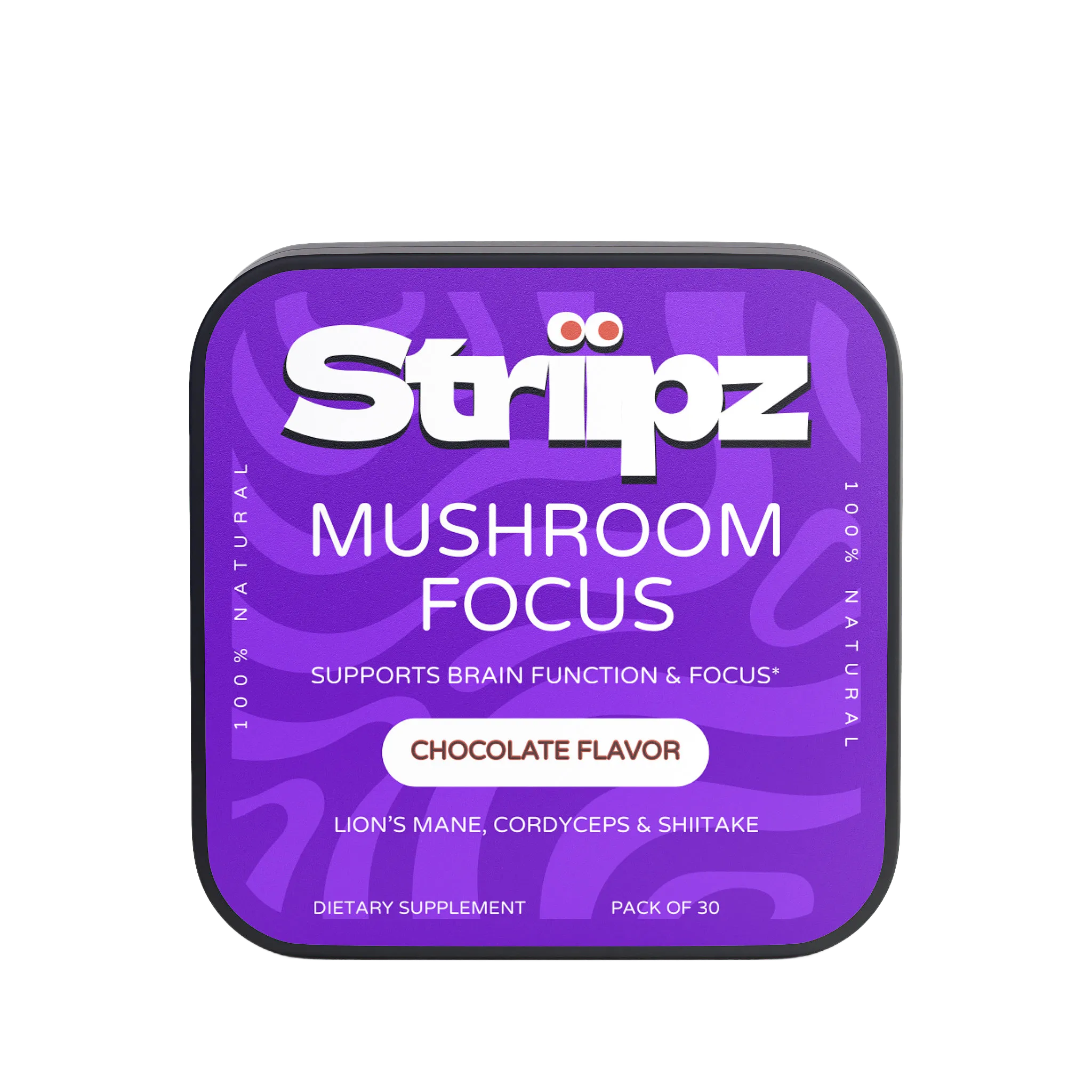
⚡ The fastest way to take Lion's Mane? The Striipz Mushroom Focus Strip — a precision-dosed sublingual strip that dissolves in seconds. No pills, no powders, no prep. Just clean, fast-acting cognitive support.
Are There Any Side Effects?
Who Should Avoid It
Lion's Mane is well-tolerated by most adults. However, individuals with mushroom allergies should avoid it. Those with autoimmune conditions should consult a physician, as Lion's Mane may modulate immune activity. Pregnant or breastfeeding individuals should also seek medical guidance before use.
Drug Interactions to Know
Lion's Mane may have additive effects with anticoagulant medications (e.g., warfarin) due to mild platelet-inhibiting properties observed in animal studies. If you are on blood thinners or immunosuppressants, consult your healthcare provider before supplementing.
Frequently Asked Questions
How long does Lion's Mane take to work?
Most users notice subtle improvements in focus and mental clarity within 2–4 weeks of consistent daily use. The NGF-stimulating effects that support memory and neuroprotection build over 8–12 weeks. Think of it as a long-term investment in brain health, not an overnight fix.
Can I take Lion's Mane every day?
Yes. Daily supplementation is both safe and recommended based on current evidence. The clinical trials showing the strongest cognitive benefits used daily dosing protocols over 8–16 weeks. Cycling is not necessary.
Is Lion's Mane safe for long-term use?
Available evidence suggests Lion's Mane is safe for long-term use in healthy adults. No significant adverse effects have been reported in human clinical trials. As with any supplement, periodic reassessment with a healthcare provider is prudent.
Does Lion's Mane work immediately?
Not in the way caffeine does. Some users report a mild sense of mental clarity on the first day, particularly with high-bioavailability formats like sublingual strips. However, the most meaningful cognitive benefits — improved memory, sustained focus, neuroprotection — emerge with consistent use over weeks.
Conclusion
Lion's Mane mushroom stands apart in the nootropic landscape because its benefits are rooted in biology, not stimulation. By supporting NGF production, reducing neuroinflammation, and protecting long-term brain health, it addresses the root causes of cognitive underperformance — not just the symptoms. Whether you're a student, professional, or athlete, the evidence supports Lion's Mane as a meaningful addition to a cognitive performance stack. And if you want the fastest, most bioavailable way to experience those benefits, the Striipz Mushroom Focus Strip delivers — no pills, no powders, just results. Shop the Mushroom Focus Strip →