
Posted by Nikhil Khanpara
on July 18, 2026

The morning ritual of reaching for coffee is deeply ingrained in American culture — but for millions of people, it comes with a cost: jitteriness, mid-afternoon crashes, dependency, disrupted sleep, and a digestive system that's less than thrilled. The search for a better way to fuel the day has never been more urgent — or more promising.
Whether you're looking to quit coffee entirely, reduce your intake, or simply find a smarter energy drinks alternative that delivers clean energy without the downsides, this guide covers everything you need to know. From green tea to natural caffeine sources, Vitamin B12, and beyond — here's how to power your day on your own terms.
Why People Are Ditching Coffee and Conventional Energy Drinks
Coffee and mainstream energy drinks dominate the market, but their limitations are well-documented:
- Caffeine spikes and crashes — High-dose caffeine produces a sharp energy peak followed by an equally sharp decline, leaving you more fatigued than before.
- Anxiety and jitteriness — Caffeine stimulates the adrenal glands, elevating cortisol and adrenaline — useful in small doses, counterproductive in excess.
- Sleep disruption — Caffeine's half-life of 5–7 hours means an afternoon coffee can still be active in your system at midnight.
- Dependency and withdrawal — Regular high-dose caffeine use leads to tolerance, requiring more for the same effect, and withdrawal headaches when skipped.
- Digestive irritation — Coffee is highly acidic and stimulates gastric acid production, causing discomfort for many users.
- Artificial ingredients — Most commercial energy drinks are loaded with synthetic colors, artificial sweeteners, and excessive sugar.
The demand for healthy energy alternatives that deliver sustained energy without these trade-offs has driven explosive growth in the natural energy supplement category.
What Makes a Great Coffee Replacement?
The ideal coffee replacement should deliver:
- Smooth, sustained alertness without spikes or crashes
- Mental clarity and focus, not just stimulation
- No jitteriness, anxiety, or heart palpitations
- Clean ingredients with no artificial additives
- Minimal impact on sleep when used appropriately
- Digestive comfort
The ingredients that best meet these criteria — individually and in combination — are green tea extract, natural caffeine from botanical sources, and Vitamin B12. Here's the science behind each.
Green Tea: The World's Most Studied Energy Botanical
Green tea has been consumed for over 4,000 years — and modern science has validated its reputation as one of the most effective and balanced sources of clean energy on the planet. Its unique combination of caffeine and L-theanine is what sets it apart from every other caffeinated beverage.
The Green Tea Difference: Caffeine + L-Theanine
Green tea contains approximately 25–50mg of caffeine per serving — roughly one-third to one-half of a standard coffee. But the real magic is the presence of L-theanine, an amino acid that modulates caffeine's stimulant effects:
- L-theanine promotes alpha brain wave activity — a state of calm, focused alertness
- It blunts the cortisol spike caused by caffeine, reducing anxiety and jitteriness
- Together, they produce sharper attention, faster reaction time, and better working memory than caffeine alone
- The combination extends the duration of energy without the sharp crash
This is why green tea drinkers consistently report feeling alert and focused without the edge that coffee produces. For those seeking a coffee replacement that still delivers cognitive performance, green tea extract is the gold standard starting point.
Additional Benefits of Green Tea
Beyond energy, green tea delivers a remarkable range of health benefits:
- EGCG (epigallocatechin gallate) — A potent antioxidant that reduces oxidative stress, supports cardiovascular health, and has demonstrated anti-inflammatory properties.
- Metabolic support — Green tea extract has been shown to modestly increase fat oxidation and metabolic rate, making it a popular ingredient in energy supplements for active individuals.
- Blood sugar regulation — Green tea improves insulin sensitivity, helping to prevent the blood sugar swings that contribute to energy crashes.
- Gut health — Unlike coffee, green tea is alkaline-forming and supports a healthy gut microbiome.
Natural Caffeine: Not All Caffeine Is Created Equal
Caffeine itself is not the enemy — the source, dose, and delivery method matter enormously. Natural caffeine from botanical sources behaves differently in the body than synthetic caffeine found in most energy drinks.
Top Natural Caffeine Sources
- Green tea extract — As discussed, paired with L-theanine for smooth, focused energy.
- Guarana — A South American berry with naturally occurring caffeine bound to tannins, which slow absorption and extend the energy curve. Guarana delivers more gradual, sustained energy compared to isolated caffeine.
- Yerba maté — Contains caffeine alongside theobromine and theophylline — a trio of xanthines that produce a uniquely smooth, long-lasting energy without the crash associated with coffee.
- Coffeeberry® (whole coffee fruit extract) — Derived from the fruit surrounding the coffee bean, it contains natural caffeine alongside polyphenols that support brain-derived neurotrophic factor (BDNF) — a protein critical for cognitive function and neuroplasticity.
When choosing an energy drinks alternative, look for products that specify the botanical source of their caffeine rather than listing "caffeine anhydrous" — a synthetic, fast-acting form that's more likely to cause spikes and crashes.
Vitamin B12: The Cellular Energy Cofactor
Vitamin B12 (cobalamin) is one of the most important and most commonly deficient nutrients in the modern diet — and its role in energy production is fundamental, not peripheral.
How Vitamin B12 Powers Your Cells
B12 is essential for:
- Red blood cell formation — B12 is required for the production of healthy red blood cells that carry oxygen to muscles and the brain. Deficiency leads to megaloblastic anemia — a condition characterized by profound fatigue.
- Mitochondrial function — B12 is a cofactor in the conversion of food into ATP (cellular energy). Without adequate B12, your mitochondria — the cell's power plants — operate below capacity.
- Myelin synthesis — B12 maintains the myelin sheath around nerve fibers, which is critical for fast, efficient neural signaling — directly impacting cognitive speed and mental clarity.
- Homocysteine regulation — B12 converts homocysteine to methionine. Elevated homocysteine is associated with brain fog, fatigue, and cardiovascular risk.
Who Is at Risk of B12 Deficiency?
B12 deficiency is more common than most people realize:
- Vegans and vegetarians (B12 is found almost exclusively in animal products)
- Adults over 50 (reduced stomach acid impairs B12 absorption)
- Those taking metformin or proton pump inhibitors
- Anyone with digestive conditions affecting nutrient absorption
For these groups, B12 supplementation isn't optional — it's essential for baseline healthy energy and cognitive function. Methylcobalamin is the preferred bioactive form, superior to the cheaper cyanocobalamin found in most supplements.
The Energy Crash Explained — and How to Avoid It
The dreaded 2–3pm energy crash is not inevitable — it's a consequence of how most people fuel their mornings. Here's what's happening:
- High-dose caffeine spikes adenosine blockade, creating artificial alertness
- Blood sugar rises sharply from sugary coffee drinks or energy drinks, then crashes
- Cortisol peaks in the morning and naturally declines by early afternoon
- Dehydration accumulates throughout the morning, impairing cognitive function
The solution is no crash energy: lower, more consistent caffeine from botanical sources, blood sugar stability from clean ingredients, and cellular energy support from B vitamins — rather than a single large stimulant hit that inevitably wears off.
Comparing Your Options: Coffee vs. Energy Drinks vs. Natural Alternatives
| Factor | Coffee | Conventional Energy Drinks | Natural Energy Supplements |
|---|---|---|---|
| Caffeine source | Natural (coffee bean) | Synthetic anhydrous | Botanical (green tea, guarana) |
| Energy curve | Spike + crash | Sharp spike + hard crash | Smooth, sustained |
| Anxiety/jitters | Common | Very common | Minimal (with L-theanine) |
| Sleep impact | Significant | Severe | Minimal at appropriate doses |
| Nutrient support | Minimal | Synthetic B vitamins only | B12, antioxidants, adaptogens |
| Digestive comfort | Often poor | Often poor | Generally excellent |
| Dependency risk | High | High | Low |
Energy Supplements: What to Look for on the Label
The energy supplements market is crowded with products that promise clean energy but deliver little more than synthetic caffeine and artificial flavors. Here's how to identify genuinely superior formulas:
- Named botanical caffeine sources — Green tea extract, guarana, or yerba maté rather than "caffeine anhydrous"
- L-theanine included — The essential partner to caffeine for smooth, focused energy
- Methylcobalamin (B12) — The bioactive form for genuine cellular energy support
- No artificial colors or sweeteners — Red flags for overall formula quality
- Transparent dosing — Avoid proprietary blends that hide individual ingredient amounts
- Moderate total caffeine — 100–150mg is the sweet spot for sustained energy without overstimulation
Why Oral Dissolving Strips Are the Smartest Energy Format
How you consume your energy supplement matters as much as what's in it. Traditional formats have real limitations:
- Coffee — Requires preparation, is acidic, and is difficult to dose precisely
- Energy drinks — Bulky, sugary, and often contain 200–300mg of caffeine in a single can
- Capsules/tablets — Slow absorption (45–90 minutes), require water, inconvenient on the go
Oral dissolving strips absorb sublingually in minutes, delivering a precise, consistent dose of natural caffeine, L-theanine, and B12 directly into the bloodstream — no preparation, no water, no waiting. They fit in a wallet, work anywhere, and deliver clean energy on demand.
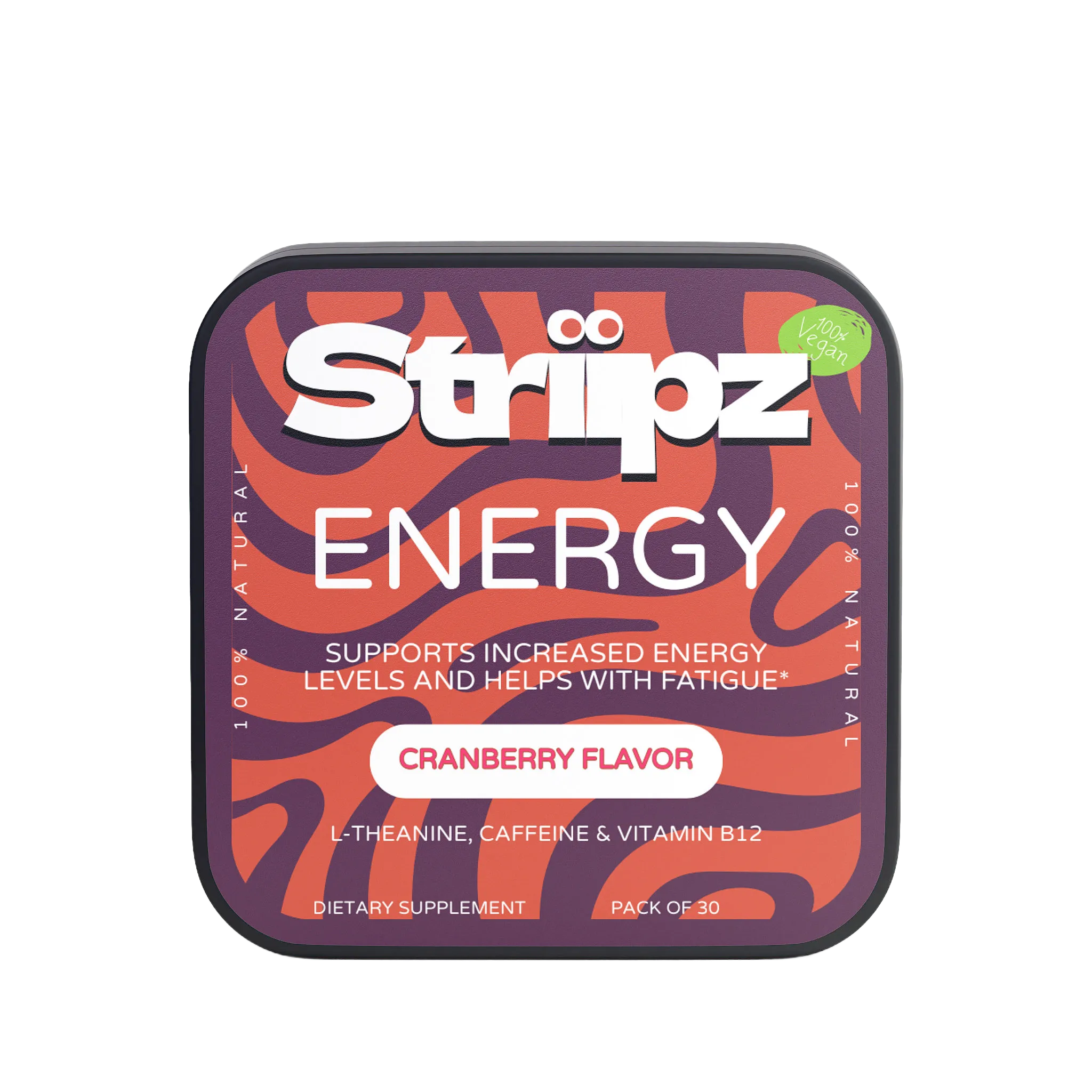
Striipz Energy strips are formulated with green tea-sourced caffeine, L-theanine, and methylcobalamin B12 — the complete coffee replacement stack in one ultra-thin strip. Whether you're heading into a morning meeting, a workout, or a long drive, Striipz delivers no crash energy that keeps pace with your day.
How to Transition Away from Coffee
Going cold turkey on coffee often leads to withdrawal headaches and fatigue. A smarter approach:
- Week 1: Replace one daily coffee with a green tea or natural energy supplement. Keep total caffeine similar to avoid withdrawal.
- Week 2: Replace a second coffee. Notice improvements in sleep quality and afternoon energy stability.
- Week 3–4: Complete the transition. Most people find they need less total caffeine once the crash-and-compensate cycle is broken.
- Ongoing: Maintain with a consistent natural energy routine and ensure adequate B12 intake.
Final Thoughts
The era of jittery, crash-prone energy is over. Green tea, natural caffeine from botanical sources, and Vitamin B12 represent a fundamentally better approach to healthy energy — one that works with your biology rather than forcing it into overdrive.
Whether you're looking for a complete coffee replacement, a cleaner energy drinks alternative, or simply a way to feel more consistently energized throughout the day, the answer lies in smarter ingredients, smarter dosing, and smarter delivery.
Try Striipz Energy strips — and experience what clean, sustained energy actually feels like.